- Xewkija
- Rotunda with a lift to the dome
- Xagħra
- Ġgantija and two caves
- Għarb
- Baroque church and folklore museum
- Nadur and Qala
- Lookout tower, bakeries, views of Comino
Xewkija: the church with the giant dome
Driving from the ferry to Victoria, you see it from far away: the Rotunda of Xewkija, the Church of St John the Baptist. The Maltese architect Ġużè Damato took Santa Maria della Salute in Venice as his model, only larger. The foundation stone was laid on 4 May 1952, and the church was consecrated on 17 June 1978. According to Wikipedia it is the largest church on Gozo.
The dome measures 27 metres in internal diameter and is 75 metres high. The sculpture museum under the bell tower holds statues from the old church, and from there a lift takes you up to the dome. From the top you can see across all of Gozo to the north of Malta. The saint's day is 24 June; the festa usually falls on a nearby Sunday, in 2026 on 21 June.
Xagħra: temples, caves and a big square
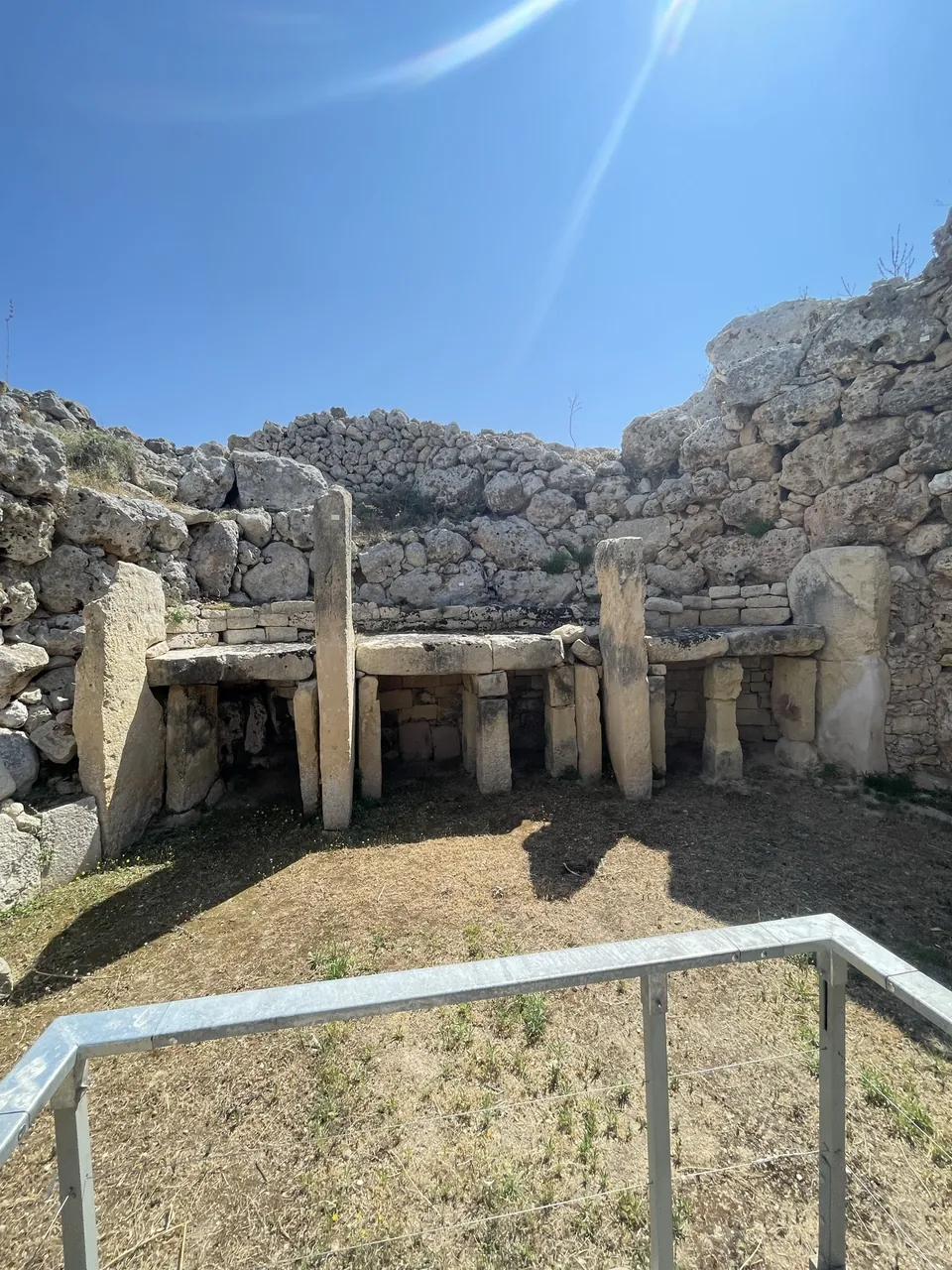
With about 5,350 residents in July 2024, Xagħra is the second-largest town on Gozo. On the edge of the village stand the Ġgantija temples, dated to around 3600 BC. In the centre lies a large square with the Basilica of the Nativity of Our Lady, cafés and benches under trees. The big feast is on 8 September.
Under two private houses are small caves with stalactites, discovered while digging wells: Ninu's Cave in 1888 and Xerri's Grotto around 1923/24. According to the local council both are easy to reach from the village square; travel reports mention a small fee. In the off-season they are often closed. From the edge of the plateau you look down on Ramla Bay and Calypso's Cave.
Stay in a village
If you like it quiet, stay in one of the villages and see Gozo away from the coastal resorts.
You see the live price and availability with the provider. Many offers can be cancelled for free – check this in the offer itself.
Għarb: baroque on the village square
Għarb in the west has only about 1,600 residents but one of the island's prettiest squares. The parish church was built between 1699 and 1729 in baroque style; its curved façade recalls Borromini's Sant'Agnese in Rome. On the square is a folklore museum with objects from rural life on the islands.
Around Għarb lie some of the key sights in the west: the Ta' Pinu basilica, the Ta' Dbieġi crafts village and the valley towards Wied il-Mielaħ. On the coast stands the small chapel of San Dimitri, surrounded by a legend about a son set free.
Nadur: views, bread and feasts
Nadur sits on a ridge in the east and has about 4,625 residents. According to Wikipedia, Ta' Kenuna tower was built by the British in the mid-19th century and served as a telegraph link between Malta and Gozo. From there you see much of the island, Comino and Mellieħa on Malta.
Nadur is known for its bakeries; get fresh bread or ftira in the morning. The parish church of St Peter and St Paul was begun in 1760. On 29 June Nadur celebrates the Mnarja feast. Below the village lie the small bays of San Blas and Daħlet Qorrot.
Qala: the easternmost village
Qala is Gozo's easternmost village, with about 2,350 residents. Around it you will find a well-preserved windmill, salt pans and prehistoric remains. At the tip of the coast stands St Anthony's Battery, built in 1731–32 to guard the mouth of the channel between Gozo and Comino.
Down by the sea lies the bay of Ħondoq ir-Rummien, directly opposite Comino, with a small sandy beach. It is popular for swimming and with beginner divers. Qala's village feast is on the first Sunday of August.
Village feasts: the summer festas
Every village celebrates its patron saint's feast in summer with a procession, brass bands, strings of lights and fireworks. The dates above show some of them: Xewkija in June, Nadur on 29 June, Qala in early August, Xagħra on 8 September. The villages fill with people, and food stalls stay open late into the night.
If you want to experience a feast, ask your accommodation for the programme. Expect closed roads and little parking on feast days. Fireworks can be loud, for dogs and small children too.
How to visit the villages
All five villages are reachable by public bus from Victoria. The hop-on hop-off bus stops in Xewkija, in Xagħra near Ġgantija and in Nadur. More on the page getting around Gozo.
A good day in the east combines Xewkija, Nadur and Qala; a day in the west combines Għarb with Ta' Pinu and Ta' Dbieġi. Xagħra goes well with the temples and Ramla Bay. Explore the lanes on foot, look into the churches when no Mass is on, and cover shoulders and knees there.
Last checked: 8 November 2026. Prices, times and access change, please check locally or with the operator.
Sources: Wikipedia: Rotunda of Xewkija · Wikipedia: Xagħra · Xagħra Local Council · Wikipedia: Għarb · Wikipedia: Nadur · Wikipedia: Qala